
Author: Ian

  • Writing in the Presence of Grief

    Writing in the Presence of Grief

    Grief rarely arrives as a single emotion. When someone dies suddenly, especially a child, the mind does not move neatly from sorrow to acceptance. Instead, it travels through a landscape of conflicting states: depression, denial, anger, guilt, and a restless search for meaning. Much of Smiler grew out of that journey.

    Depression

    Depression is often described as sadness, but the experience is something different. It is more accurately a narrowing of the world. Ordinary things lose their colour and urgency. Time changes shape. Days feel heavy and slow, yet weeks can pass almost unnoticed. The future, which once seemed open and expansive, begins to close in around the present.

    For those experiencing profound grief, depression can feel isolating in ways that are difficult to explain. Life outside continues as normal while internally everything has shifted. The rhythms that once organised daily life no longer seem relevant. In that sense depression is not simply an emotional response to loss, but a change in the way the world itself is perceived.

    Suicide

    Within that darkness the mind inevitably encounters thoughts about escape. For some people this appears as the thought of suicide. Often it is not a plan or a decision, but a question that surfaces when pain feels unending. The very appearance of the thought can be unsettling.

    Silence around this subject can make it harder to confront. Speaking or writing about it honestly allows the thought to be examined rather than hidden. Acknowledging its presence does not mean accepting it as an answer. Instead it allows the conversation to move from secrecy towards understanding.

    Denial and Anger

    Grief also produces its own forms of denial and anger. Denial is not always a refusal to accept what has happened. More often it appears as a quieter resistance to reality. The mind continues to expect the familiar voice, the familiar presence, as if the world might somehow correct itself.

    Anger grows from the same place. It may have no clear direction. Sometimes it attaches itself to institutions, circumstances or strangers. At other times it turns inward. Anger is rarely rational, but it reflects the mind’s refusal to accept that something irreversible has occurred.

    Guilt and a Deal with the Devil

    Among the most persistent responses to loss is guilt. The mind begins to revisit the past with forensic intensity. Every moment is reconsidered. Conversations are replayed. Small decisions are examined as though they might hold the explanation for what has happened.

    In that state it is easy to imagine alternative histories. If only one moment had unfolded differently, perhaps the entire outcome might have changed. This is where grief can begin to resemble a kind of bargaining with the past — a private and impossible deal with the devil in which one searches for a way to reverse time.

    Of course, the past cannot be renegotiated. Yet the mind often insists on returning to these questions long after reason understands their futility.

    Literary DNA and Self-Expressive Writing

    For me, writing became one of the ways of living with these thoughts. Writing does not resolve grief, but it can give shape to experiences that otherwise feel chaotic. A sentence becomes a small act of order imposed on confusion.

    Over time it became clear that writing about grief was not only about personal expression. It was also shaped by the writers whose work had influenced me. When reading books such as A Grief Observed by C.S. Lewis or Joan Didion’s The Year of Magical Thinking, it is obvious that each writer carries their own intellectual inheritance into the experience of loss.

    We all possess a kind of literary DNA — a set of ideas, influences and habits of thought absorbed through reading and reflection. When grief arrives, those influences become part of the language through which we attempt to understand what has happened.

    Self-expressive writing therefore becomes something more than a private act. It connects the writer to a much longer conversation in which others have attempted to face loss through language. Each account is individual, but each also echoes those that came before.

    If Smiler contributes anything, it is simply another voice within that continuing conversation.

    A Closing Reflection

    The essays and reflections in Smiler emerged from that same process of writing through confusion rather than writing from certainty. The book does not attempt to offer conclusions about grief, because grief rarely provides them. Instead it records a series of attempts to understand how loss reshapes the mind, memory and the language through which we describe our lives. In that sense the act of writing became less about explanation and more about exploration — a way of walking carefully through the darker corners of experience and placing words where silence might otherwise remain.
  • Place and Landscape

    Place and Landscape

    Places carry memory. Long after the people who once lived there have gone, the land still holds traces of their presence.

    Landscape in my work is not simply a backdrop but part of the story itself, shaping how people live, travel and remember.

    Place is more than a setting in my work. It acts as a form of memory.

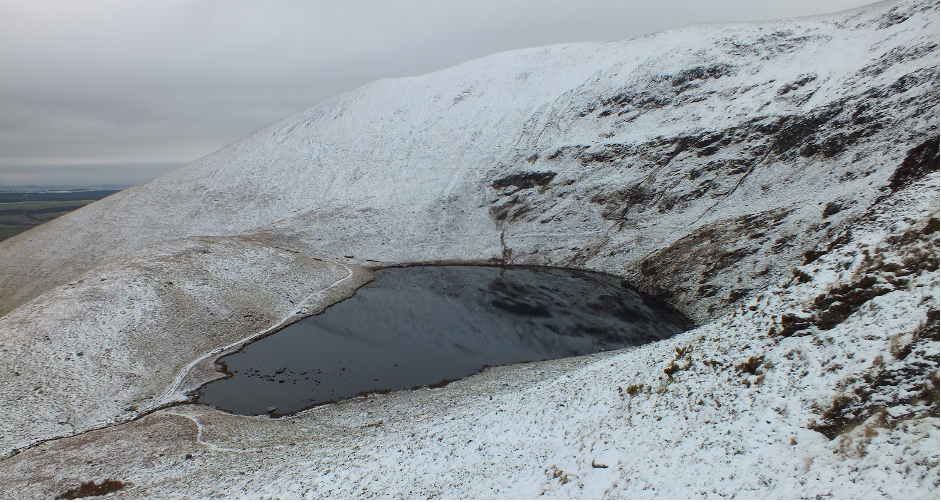
    Landscape holds traces of the past in ways that are often subtle. Old paths, ruined walls, field patterns or place names can carry stories that stretch back centuries. Walking through a landscape can sometimes feel like moving through layers of time, where earlier lives are only partially hidden beneath the present.

    Cumbria, where I live, is one such landscape. The fells, valleys and villages of the region are shaped by centuries of farming, conflict and settlement. The land still carries evidence of those histories. For a writer, this creates a sense that stories are not invented from nothing but discovered through attention to place.

    Landscape also shapes how people live. Geography influences travel, trade, work and community. A remote valley will produce a different way of life from a busy port. The environment affects how people move through the world and the choices available to them.

    This relationship between people and place becomes particularly important in historical fiction. Before the speed of modern transport and communication, geography imposed real limits. Journeys that seem short today could once take days or weeks. Communities were often shaped by the boundaries of the landscape around them.

    When writing about the past, understanding the physical world in which people lived is essential. Landscape provides the conditions in which lives unfold. It also offers continuity. Long after individual lives have disappeared, the land remains, quietly holding their traces.

    These themes also inform my current historical novel William, which explores the lives of ordinary people during the upheavals of the eighteenth century.

  • Ordinary Lives Within Historical Events

    Ordinary Lives Within Historical Events

    History is usually told through the actions of leaders and armies. Yet most people experience historical change not through power, but through the disruption of ordinary life.

    My writing focuses on those quieter perspectives — the lives of individuals navigating events far larger than themselves.

    History is often written through the lives of kings, generals and political leaders. Their decisions shape events, but they rarely represent how history was actually experienced. Most people encounter historical change not as grand strategy but as disruption to ordinary life. War, political upheaval, migration and economic change are felt first in homes, farms, streets and workplaces.

    My interest as a writer lies in those quieter spaces. I am drawn to the lives of people who would rarely appear in official records: labourers, families, migrants, soldiers or prisoners who find themselves caught in forces much larger than themselves. Their decisions are usually practical rather than heroic. They respond to circumstances rather than shaping them. Yet their experiences are the real texture of history.

    This approach shifts the focus away from spectacle and towards consequence. A rebellion is not only a battle; it is also the moment when someone leaves home and may never return. Transportation is not just a policy of empire; it is a family suddenly separated by an ocean. Even major political movements become personal when viewed through the life of an individual trying to survive them.

    Writing in this way also allows space for ambiguity. Ordinary people rarely know how events will turn out. They act with incomplete information, rumours and assumptions. In that sense their experience is closer to our own. History only appears inevitable in retrospect.

    The aim is not to recreate history from above but to experience it from within. By following individual lives, the scale of historical events becomes clearer, not through explanation but through lived experience.

    These themes also inform my current historical novel William, which explores the lives of ordinary people during the upheavals of the eighteenth century.

  • Generational Inheritance

    Generational Inheritance

    The past rarely ends with the people who lived it. Decisions, migrations and losses often echo quietly through the generations that follow.

    Many of my stories explore how lives unfold across time, shaped by histories that are sometimes only partially understood.

    Lives rarely exist in isolation. Each generation inherits the consequences of the one before it.

    Inheritance is often understood in material terms — land, property or wealth passed from parent to child. Yet there are other forms of inheritance that shape lives just as strongly. Decisions made decades earlier can alter the direction of families and communities long after the original moment has passed.

    Migration, loss, opportunity and conflict all leave traces that move forward through time. A journey taken by one generation may determine where the next is born. A single decision can echo quietly through lives that follow.

    This idea of generational inheritance lies at the centre of much of my writing. Rather than focusing on a single moment in history, I am interested in how stories unfold across time. Characters may not fully understand the past that shaped them, but they still live within its consequences.

    Historical fiction provides a natural space for exploring these connections. It allows movement between different periods and perspectives, revealing how one life influences another. Seen this way, history becomes less a sequence of isolated events and more a continuing conversation between generations.

    The past does not disappear. It travels with us in the form of memory, landscape and the decisions that shape the lives we inherit.

    These themes also inform my current historical novel William, which explores the lives of ordinary people during the upheavals of the eighteenth century.

  • History and Memory

    History and Memory

    History records events, but memory reveals how those events were lived.

    Much of my writing explores the space between official historical accounts and the personal experiences that rarely appear in the historical record.

    History and memory are not the same thing. History attempts to record events, while memory reflects how those events are experienced and remembered by individuals.

    Official histories often focus on what can be documented: battles fought, laws passed, governments formed and dissolved. These accounts are important, but they do not always capture how events were felt by the people who lived through them.

    Memory is more personal and often less certain. It carries emotion, interpretation and sometimes silence. Families remember stories in fragments: a migration, a loss, a journey that changed everything but was never fully explained. These memories can shape identity long after the original events have passed.

    As a writer, I am interested in the space between recorded history and lived memory. Fiction allows exploration of that gap. It can imagine the inner lives that historical documents rarely reveal.

    Many historical records tell us what happened but not how it felt. They rarely describe the uncertainty of living through events whose outcome was unknown. Fiction can restore some of that immediacy by placing the reader inside the moment rather than observing it from a distance.

    This approach does not replace historical fact but works alongside it. Research provides the structure and context, while narrative explores the emotional and human dimensions that formal history often leaves untouched.

    In this way storytelling becomes another way of understanding the past.

    These themes also inform my current historical novel William, which explores the lives of ordinary people during the upheavals of the eighteenth century.

  • From Thesis to Memoir: The Power of Autoethnography in Grief Therapy Research and Beyond

    From Thesis to Memoir: The Power of Autoethnography in Grief Therapy Research and Beyond

    Introduction

    The journey from academic research to personal memoir, creative writing, and even self-help books can be a profound one. Even more so when the subject matter is deeply personal. In my case, this transformation was born out of the need to make sense of my grief following the loss of my son, Dom. My Ph.D. thesis explored the use of creative and self-expressive writing as a form of grief therapy. It served as the foundation for what would become a memoir and a piece of creative writing. This essay provides an overview of my experience. It highlights the pivotal role of autoethnography in this process and offers advice to other students seeking to embark on a similar path. Moreover, it showcases how this research journey has also extended into the creation of self-help books, amplifying the impact of my work.

    From Thesis to Memoir: The Healing Power of Personal Narratives

    The journey from academic thesis to memoir is, in many ways, a journey from the head to the heart. In academia, we are often trained to approach subjects with intellectual rigour and objectivity. However, when it comes to deeply personal topics such as grief, the heart and the emotions cannot be neatly compartmentalised. The transition from research to personal narrative allowed me to blend these two seemingly disparate realms.

    Autoethnography, a methodology that encourages self-reflection and personal storytelling within the research process, was the linchpin that bridged these two worlds. It allowed me to weave together the analytical and the emotional, the academic and the personal. Through this method, I became both the researcher and the subject, navigating my way through academia and the intricate process of grief.

    The Role of Autoethnography

    Autoethnography is a qualitative research approach that emphasises the researcher’s personal experiences and reflections as a means of understanding a larger social or cultural context. In my case, autoethnography became a therapeutic tool that enabled me to examine my grief journey through an academic lens. It invited me to delve deep into the contours of my own emotions, my memories of Dom, and my responses to loss.

    The autoethnographic approach demanded a level of self-exploration that can be both challenging and healing. It encouraged me to write my own narrative while maintaining the rigour and methodology of academic research. This dual role of researcher and subject allowed me to transform my grief into a meaningful and enlightening process.

    Navigating Grief Through Autoethnography

    While conducting my research, I found myself shifting from a detached researcher to an emotionally engaged participant. Autoethnography allowed me to confront the raw and painful moments of my journey. I recorded my thoughts, fears, and revelations as they unfolded, transforming them into data points for analysis.

    The act of writing became a form of catharsis. It was through this process that I realised how my thesis was not merely an academic exercise but a therapeutic tool for myself. The creative and self-expressive writing I had studied began to serve as a refuge, a means to confront the complex emotions that grief had thrust upon me.

    The Power of Storytelling

    Once the research phase was complete and I was awarded my doctorate, I was faced with the daunting task of transforming my thesis into a memoir. Autoethnography provided a natural segue into this creative endeavour. It allowed me to harness the emotional depth of my research and convert it into a compelling narrative.

    In my memoir, I weaved together the academic findings with my personal experiences. The memoir was not merely a recounting of facts but a vivid exploration of my own journey through grief. By embracing autoethnography, I could authentically convey the emotional rollercoaster of loss, the ups and downs, the moments of despair, and the glimpses of hope.

    Honouring Dom’s Memory

    In addition to the memoir, I sought to create a piece of creative writing that would pay homage to my son’s memory. This was perhaps the most challenging part of my journey. Autoethnography, however, acted as a guide. It enabled me to tap into my creative instincts while staying rooted in the profound lessons I had learned through my research.

    The creative piece, a heartfelt tribute to Dom, allowed me to express the love and grief that had been bottled up inside me. It was both a release and a celebration of his life. Autoethnography reminded me that the most profound writing often emerges from the heart, and my creative work was a testament to this truth. The memoir is now published and entitled Smiler.

    Self-Help Books: Extending the Impact

    The journey from research to personal narratives had a profound impact not only on my own healing but also on my ability to help others. Drawing on the insights and experiences gathered during my research, I felt compelled to produce self-help books that could provide guidance and solace to those who, like me, had experienced loss.

    The first book, Remember with Love, emerged as a guide for children coping with the loss of a pet. It drew from my research on creative and self-expressive writing, offering practical tools and emotional support to young minds facing the pain of bereavement.

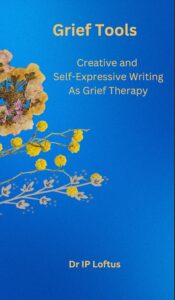
    The second book, Grief Tools, became a guide for parents who had experienced the unimaginable loss of a child. In this work, I applied the methodologies and emotional depth cultivated during my research to provide a lifeline to those navigating the most profound grief.

    Advice for Other Students

    As I reflect on this transformative journey, I would like to offer some advice to other students who may be considering a similar path:

    • Embrace Autoethnography: Autoethnography is a powerful method for deeply personal research. It invites you to explore your own experiences, emotions, and memories within the academic context. Don’t shy away from it; instead, let it be your guiding light.
    • Find the Healing in Research: Academic research need not be a detached pursuit. It can be a source of healing and self-discovery. Use your research as a mirror to navigate your own experiences, particularly if your work revolves around deeply personal themes like grief.
    • Weave the Academic and the Personal: When transitioning from research to creative writing, a memoir, or self-help books, remember that the academic and the personal can coexist harmoniously. Let your research findings enrich your narratives, and vice versa.
    • Don’t Rush the Creative Process: Creative writing is an art that cannot be rushed. It’s a deeply personal journey, and it’s okay to take your time. Let your emotions and experiences guide your creative process, and trust that your unique voice will shine through.
    • Extend Your Impact: If your research touches upon profound human experiences, consider how it can be extended to help others. Self-help books, guides, or other forms of outreach can amplify the impact of your work and provide support to those in need.
    • Honour Your Truth: In the process of transforming your research into creative works, stay true to your experiences and emotions. This is your story, and it deserves to be told authentically.

    In conclusion,

    My journey from academic research to memoir, creative writing, and self-help books, fuelled by autoethnography, has been a testament to the power of storytelling and the capacity of research to bring healing to both the author and the wider community. Through this process, I have not only unearthed the transformative potential of personal narratives but also extended my reach to offer solace and guidance to those grappling with grief. In doing so, I’ve learned that the most authentic and powerful narratives are born from the heart and have the potential to resonate deeply with others who are on a similar path of healing and self-discovery. My experience underscores that when research, creative expression, and empathy converge, they can create a profound and lasting impact on the lives of those who read and reflect upon our work.

  • Grief Tools

    Grief Tools

    [et_pb_section fb_built=”1″ admin_label=”section” _builder_version=”4.16″ hover_enabled=”0″ global_colors_info=”{}” sticky_enabled=”0″][et_pb_row admin_label=”row” _builder_version=”4.16″ background_size=”initial” background_position=”top_left” background_repeat=”repeat” global_colors_info=”{}”][et_pb_column type=”4_4″ _builder_version=”4.16″ custom_padding=”|||” global_colors_info=”{}” custom_padding__hover=”|||”][et_pb_text admin_label=”Text” _builder_version=”4.17.6″ background_size=”initial” background_position=”top_left” background_repeat=”repeat” width=”100%” custom_padding=”1px|||1px||” global_colors_info=”{}”]

    Grief Tools: ‘A Compassionate Guide for Parents Navigating the Unthinkable’

    Losing a child is an unimaginable tragedy, and the journey through grief can seem insurmountable. On July 23, a powerful resource emerged to provide solace and guidance to parents facing this devastating loss. Grief Tools is a heartfelt and comprehensive book specifically designed for parents who have lost a child, offering a profound exploration of death, dying, and grief, coupled with the therapeutic power of writing.

    A Comprehensive Guide for Grown-Ups

    Grief Tools, goes beyond the basics, providing in-depth insights into the complexities of death, the process of dying, and the multifaceted nature of grief. It acknowledges the profound emotional turmoil parents experience and offers thoughtful explanations to help them navigate this deeply challenging period.

    The Healing Power of Writing

    One of the standout features of this book is its emphasis on writing as a therapeutic tool for parents. The act of creative and self-expressive writing can be profoundly healing, providing an outlet for emotions that words alone cannot convey. Grief Tools explains the profound impact of journaling and self-expression as a means to cope with the pain of loss.

    Over 100 Grief Prompts

    To guide parents through their grief journey, “Grief Tools” offers more than 100 carefully crafted grief prompts. These prompts serve as a compass, helping parents navigate their emotions, memories, and thoughts. Whether it’s writing down cherished memories, expressing anger, or simply reflecting on their feelings, these prompts empower parents to process their grief at their own pace.

    A Companion for Healing

    Grief Tools is more than just a book; it’s a compassionate companion for parents in their darkest hours. It acknowledges the unique pain of losing a child and provides a roadmap for healing. The combination of detailed explanations, the therapeutic power of writing, and the guidance of grief prompts make this book an invaluable resource for parents facing the unthinkable.

    Grief Tools is a profoundly empathetic and essential resource for parents navigating the agonising journey of losing a child. By offering comprehensive insights into the intricacies of grief, coupled with the therapeutic benefits of writing, it provides parents with the tools they need to heal. The inclusion of over 100 grief prompts adds a deeply personal touch, making this book an indispensable guide for those seeking solace and understanding during their darkest days.

    Click here to purchase your copy or a guide for someone else Grief Tools – Self Expressive Writing

    [/et_pb_text][/et_pb_column][/et_pb_row][/et_pb_section]

  • Remember with Love

    Remember with Love

    Remember with Love: A Compassionate Guide for Kids Dealing with Pet Loss.


    Losing a beloved pet can be a heart-wrenching experience, especially for young children who may be grappling with grief for the very first time. That’s why I’m excited to introduce Remember with Love, a tender and thoughtful guide tailored for children aged 4-11 who are navigating the complex emotions surrounding pet loss.

    Understanding Loss with Simplicity and Compassion

    Remember with Love, offers age-appropriate explanations about the concepts of death, dying, and grief. The language is simple yet profound, making it accessible for young readers and perfect for parents or guardians to read aloud to non-readers. It’s not just a book; it’s a compassionate companion to help children comprehend their feelings during this challenging time.

    Interactive Grief Journal

    At the heart of this guide is an interactive grief journal that encourages children to express their emotions in various creative ways. With over 100 carefully crafted grief prompt questions, children can jot down their thoughts, draw pictures, or create collages as they embark on their healing journey. These questions are designed to gently guide youngsters through their grief, offering them an outlet to process their feelings.

    Empowering Both Child and Guardian

    Remember with Love serves as a bridge between children and their caregivers. While the child engages with the journal, parents or guardians can use the explanations in the book to provide comfort and context, answering questions and offering support. It’s a shared experience that fosters communication and understanding during a difficult period.

    Remember with Love is a remarkable resource that addresses a crucial yet often overlooked aspect of a child’s emotional development. By simplifying complex topics like death and grief, this book empowers both children and their guardians to navigate the challenging journey of pet loss together. The interactive journal adds an extra layer of therapeutic value, allowing kids to express themselves creatively while healing. This guide is a compassionate and necessary addition to any family dealing with the loss of a cherished pet.

    Click here to order your copy Remember with Love

  • The Awesome Power of Questions

    The Awesome Power of Questions

    [et_pb_section admin_label=”section”]
    [et_pb_row admin_label=”row”]
    [et_pb_column type=”4_4″][et_pb_text admin_label=”Text”]The Awesome Power of Questions: Unlocking Business Success and Personal Growth I’m thrilled to announce the release of the second edition of my book, The Awesome Power of Questions. This updated edition delves even deeper into the transformative potential of asking the right questions, divided into two compelling halves that promise to enhance both your business and personal life. Part One: Elevate Your Business Game In the first half of the book, I explore how the art of asking powerful questions can significantly impact your professional journey. Whether you’re involved in sales, business development, or any aspect of entrepreneurship, the insights in this section are invaluable. We’ve carefully curated over 500 questions to help you navigate various aspects of your business life, including the sales process. Here’s a glimpse of what you’ll find:

    • Sales Excellence: Discover how to handle objections effectively and keep the sales momentum rolling with the right questions.
    • Business Development: Learn how to identify growth opportunities, craft compelling strategies, and drive results.
    • Relationship Building: Explore the art of building lasting connections with clients, partners, and stakeholders through thoughtful questioning.

    Part Two: Unleash Your Potential In the second half of the book, we shift the focus towards using questions as a tool for enhancing critical thinking, creativity, and personal growth. Here, you’ll find guidance on:

    • Critical Thinking: Embrace a more profound understanding of complex issues by framing them through insightful questions.
    • Creativity: Unleash your creative genius by asking questions that challenge conventional thinking and inspire innovation.
    • Personal Development: Transform your personal life by exploring questions that guide you in setting and achieving meaningful goals.

    The second edition of “The Awesome Power of Questions” is a remarkable resource. It’s written for anyone looking to elevate both their professional and personal life. By providing a treasure trove of thought-provoking questions, this book equips you with the tools you need to navigate the complexities of business and unlock your full potential. Whether you’re an entrepreneur, a sales professional, or someone looking to enhance their critical thinking and creativity, this book is a must-read.

    Order your copy here: The Awesome Power of Questions

     [/et_pb_text][/et_pb_column]
    [/et_pb_row]
    [/et_pb_section]

  • Why Journal?

    Why Journal?

    [et_pb_section fb_built=”1″ admin_label=”section” _builder_version=”4.16″ global_colors_info=”{}”][et_pb_row admin_label=”row” _builder_version=”4.16″ background_size=”initial” background_position=”top_left” background_repeat=”repeat” global_colors_info=”{}”][et_pb_column type=”4_4″ _builder_version=”4.16″ custom_padding=”|||” global_colors_info=”{}” custom_padding__hover=”|||”][et_pb_text admin_label=”Text” _builder_version=”4.16″ background_size=”initial” background_position=”top_left” background_repeat=”repeat” global_colors_info=”{}”]

    Dear Reader,

    Welcome to my journal.

    I want to share with you why I have chosen to call this space a journal and a blog. It holds a deep significance for me and the purpose behind this platform.

    Why a Journal?

    A journal, in its essence, represents a sacred space of introspection, reflection, and authenticity. It is a place where thoughts and emotions flow freely, where one can document personal experiences and explore their inner world. An entry can hold an intimate connection with the writer’s soul. It offers a raw and unfiltered glimpse into their thoughts, struggles, and growth. In this context, a journal refers to an intimate and reflective platform where you chronicle your personal thoughts, experiences, and insights. It can also engage with the works and ideas of other writers from around the world. A journal serves as a space for deep contemplation, intellectual exploration, and meaningful conversations, encompassing a wide range of topics that resonate with you.

    Many people write journals but never share them. They often write them, as I did between 2014 and 2022 as a way to deal with something in their lives at the time. Mine became the thesis of my Doctorate called An Autoethnographical Journal: The Death of a Son, and in 2023 it became the memoir Smiler. My research focused on how creative writing or keeping a journal can be used as therapy for dealing with grief.

    Creative or Self Expressive Writing as a therapy.

    Grief is a deeply personal and often overwhelming experience that accompanies the loss of a loved one. During this challenging time, finding effective coping mechanisms becomes essential. One such powerful tool that offers solace and healing is creative writing. In this post, I highlight some of the ways in which creative writing can help navigate the complex terrain of grief. Doing so, allows them to express, reflect, and find meaning through the written word.

    1. Expressing Unspoken Emotions:
    2. Grief brings forth a whirlwind of emotions that can be difficult to articulate verbally. Creative writing provides a safe haven, a sacred space where emotions can flow freely onto the page. Through poetry, journaling, or storytelling, individuals can give voice to their pain, sadness, anger, confusion, and all the intricate emotions that accompany their grieving process.
    3. Reclaiming Personal Agency:
    4. In the midst of grief, individuals often feel a sense of powerlessness and vulnerability. Engaging in creative writing offers an opportunity to reclaim a sense of control over their narrative. They can shape their thoughts, memories, and experiences into words, creating a tangible representation of their inner world. This process empowers individuals to actively navigate their grief journey, finding strength and resilience in their ability to create and express.
    5. Reflection and Meaning-Making:
    6. Writing provides a pathway to reflection and introspection. It invites individuals to explore their thoughts, memories, and the significance of their loss. Through writing, they can make meaning out of their grief, finding connections between their experiences and their personal beliefs or philosophies. It becomes a tool for self-discovery, offering insights into their own strengths and resilience amidst the pain.

    Healing

    1. Crafting Healing Narratives:
    2. Crafting narratives through creative writing can be a cathartic and healing process. It allows individuals to shape and reframe their story of loss, finding solace in the act of creating something meaningful from their pain. By giving structure to their experiences, they can navigate the complexities of grief, identify personal growth, and discover newfound purpose or meaning arising from their journey.
    3. Connection and Support:
    4. Sharing creative writing within a supportive community fosters connection and empathy. When individuals share their written works, they often find understanding and validation from others who have experienced similar losses. Writing becomes a bridge of understanding, providing a space for communal healing and support. Engaging with others’ stories and experiences can bring a sense of belonging and alleviate the feelings of isolation that grief often brings.

    Creative writing holds immense healing potential for individuals navigating the depths of grief. Expressive writing, especially a journal, can give individuals a voice to their emotions, reclaim personal agency, and reflect on their experiences. Writing your thoughts can craft healing narratives, and find connection within a supportive community. As each person’s grief is unique, exploring creative writing as a tool for healing offers an avenue of self-expression, self-discovery, and self-care during a time of profound loss. While creative writing can be a valuable tool for grief, it’s essential to seek professional support. If your grief becomes overwhelming or prolonged, don’t be embarrassed to contact your GP, mental health professionals or support groups. They are trained people who can provide additional guidance and assistance on your path to healing.

    As a Writer.

    As a journal writer, I hope to give myself the agency and the freedom to express my opinions. A journal will allow me to delve into diverse subjects, and explore the works of writers across different time periods and cultures. It is a place where I can share my own interpretations, reflections, and connections between my own personal experiences and the profound literary contributions of others. I hope it reflects the honesty and vulnerability that I want to share with you, particularly through my book on grief and the journey towards healing.

    I’ve written a treatise on Oscar Wilde’s The Soul of Man Under Socialism, in it, I want to explore the philosophy and politics behind his writing of that. So, by embracing the term “journal,” I invite you into an intimate space where I document not just my own personal views, reflections, and insights, but those of other writers and artists, where I possibly can.

    As a Biographer.

    In this journal, I want to create a bridge between the thoughts and voices of writers from the past and present. I want to engage you in a dialogue that transcends time and geographical boundaries. It will become a space where I can celebrate the beauty of literature, gain inspiration from diverse perspectives, and share my own unique insights. I hope to bring a sense of intellectual camaraderie to readers who resonate with my passion for ideas and the written word.

    Consequently, embracing the term ‘journal’, highlights the deep significance it holds in my personal healing process and for those that have gone before. More importantly, posts will include other writers and poets like Oscar Wilde and William Wordsworth from my series Poets, Politics and Philosophy. I invite you to join me on this introspective journey as we walk the dark corridors of grief, and other Trauma, analyse Poets their Politics and Philosophy and discuss the demise of Western Society in my forthcoming 2024 book called, The Fish Who Wanted To Run.  

    Finally, thank you for being a part of this journal. I look forward to sharing the ups and downs, the insights and the revelations through my posts and through the pages of Grief and Other Minds by sharing example chapters with you.

    With heartfelt gratitude,

    IanWhy

    [/et_pb_text][/et_pb_column][/et_pb_row][/et_pb_section]